Serving Lafayette, CA and surrounding areas. (925) 298-0709
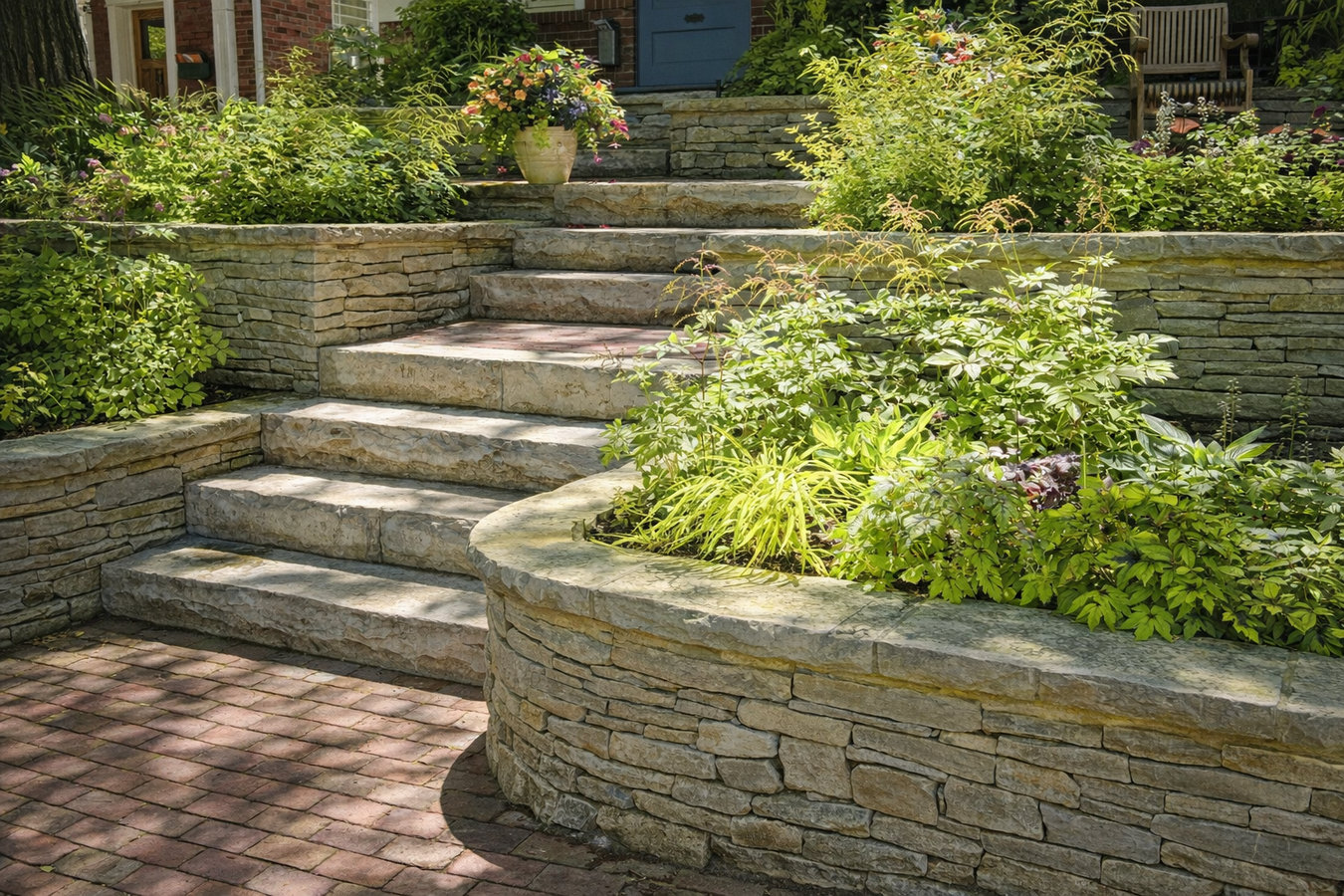
Lafayette hillsides are beautiful - until clay soils start moving after a wet winter. We build retaining walls with proper drainage and deep foundations so the slope stays exactly where it belongs, season after season.
Retaining wall construction in Lafayette means designing and building a structure that holds back soil on a slope - most residential walls under four feet take two to four days on site, while taller engineered walls or those requiring permits can run one to two weeks from permit approval to completion.
In Lafayette, a retaining wall is not a specialty item - it is a routine part of how hillside properties are maintained. The city sits in the hills of Contra Costa County, and the vast majority of residential lots have meaningful slope. When those slopes start moving, the consequences show up as cracked driveways, eroding garden beds, or soil creeping toward your foundation. The right wall, built with the right drainage behind it, stops that movement permanently.
Retaining walls are often paired with other masonry work. If the wall will support a patio or garden area, we may also work alongside our masonry restoration service when existing structures nearby need to be brought back to the same standard.
If you notice uneven humps in your yard, cracks in the ground near a slope, or a hillside section that looks steeper than it used to be, the earth is moving. In Lafayette, clay-heavy soils are prone to this kind of slow creep after wet winters, and the movement tends to accelerate rather than stabilize once it begins. A wall built before the slope gets worse is far less expensive than one built after a more significant slide.
A retaining wall that tilts away from the hillside or shows horizontal cracks running across its face is telling you it is under more pressure than it was built to handle. This pattern is common in Lafayette homes built in the 1960s through 1980s, where walls were often constructed without proper drainage behind them. Once water accumulates in the clay and pushes against the wall, cracking and lean follow.
Standing water collecting at the foot of a hillside after Lafayette's winter rains means the slope is not draining correctly. That water saturates the clay, increases the weight pushing against anything in its path, and raises the risk of a slide or erosion event. A wall with built-in drainage addresses the water movement before it damages anything downstream.
If the edge of a driveway, patio, or walkway near a slope is cracking, sinking, or pulling away from adjacent sections, the soil underneath is shifting. This is a warning sign that the ground supporting that surface is unstable. A retaining wall that addresses the slope condition stops the paving damage from progressing.
Every retaining wall project starts with understanding what the ground is doing and why. We assess the slope, the soil type, what sits above and below the wall line, and whether the site has existing drainage that needs to be worked around or redirected. From there, we recommend a wall type and material that fits the site conditions, the budget, and the visual requirements of the property. Material options include segmental concrete block, natural stone, and poured concrete - each with different load characteristics, appearances, and price points suited to different applications.
Drainage is part of every installation, not an optional add-on. We install gravel backfill and a drainage pipe behind every wall so water has somewhere to go rather than building pressure against the structure. For walls over four feet tall, we coordinate the engineering and permit process through Contra Costa County and work from a licensed engineer's design. We also handle concrete block wall construction for property boundaries and freestanding landscape walls, and we can pair a new retaining wall with masonry restoration when adjacent older structures need to match the finished result.
Best for homeowners who need a durable, cost-effective solution that handles clay-soil pressure and provides a clean, modern appearance.
Suited to Lafayette properties where the wall is a visible feature of the landscape and a more premium, naturalistic look is a priority.
Appropriate for steep lots where a single tall wall would require engineering - stepping the grade with two or three shorter walls often costs less and looks better.
Required by Contra Costa County code for any wall exceeding four feet - we coordinate the licensed engineering and permit process as part of the project.
Lafayette sits in the hills of Contra Costa County on clay-heavy soils that expand when wet and shrink when dry. That seasonal movement puts real stress on slopes every year, and it is the main reason older retaining walls in this area fail - not because the wall material gave out, but because water was never properly managed behind it. Walls built in the 1960s and 1970s, which make up a significant share of what you see in Lafayette neighborhoods, were often constructed without a drainage layer. After enough wet winters, the waterlogged clay pushes against the wall with more force than it was designed to handle, and cracking or lean is the result. A new wall built with a proper drainage system handles that same clay and that same rain year after year without issue.
The permit and HOA landscape here requires planning. Contra Costa County requires a permit for walls over four feet, and the review timeline can add two to six weeks before work begins. If your property is in an HOA community, additional design review may be required before county permitting even starts. We handle both processes and keep you informed so the timeline does not catch you off guard. Homeowners in nearby Orinda and Moraga face the same soil conditions and the same permitting requirements - we work across all three communities on projects that range from small garden terraces to full hillside stabilization.
We schedule a visit to walk the slope, assess soil conditions, and look at what is above and below the wall line. You receive a written estimate within one business day - we do not quote retaining walls by phone because the site conditions determine the design.
If your wall requires a Contra Costa County permit, we submit the application and coordinate any required engineering. We also help prepare HOA materials if your neighborhood requires design review. Permit review typically adds two to six weeks - we start this process as soon as the design is approved.
The crew digs the foundation trench, levels and compacts the base, and sets the first course of wall material. This step is the noisiest and most disruptive part of the job. In Lafayette clay soils, it also takes longer than on sandier ground - that is normal and a sign the base is being set correctly.
The crew builds the wall course by course, installing gravel backfill and a drainage pipe as they go. When complete, we walk the finished wall with you, confirm drainage looks right, and coordinate any required county inspection. The crew cleans up the site before leaving.
Spring and summer slots fill fast. Call or request a free on-site estimate - we respond within one business day and handle all permit paperwork.
(925) 298-0709Every retaining wall we build includes a gravel drainage layer and perforated pipe behind it. This is not an upgrade - it is how a wall is supposed to be built in a climate with wet winters and clay soil. The walls that fail in Lafayette almost always lack this drainage, and adding it after the fact means rebuilding. We do it right the first time.
We have pulled permits through Contra Costa County's Building Inspection Division for walls of all heights and complexities. We know what the review process requires, how long it typically takes, and how to keep things moving if questions come up during review. You will know the permit timeline upfront before any work starts, so it does not catch you off guard.
Lafayette sits on expansive clay soils that behave differently from the sandy soils in other parts of California. We design wall foundations and drainage systems with that behavior in mind, not as a standard calculation applied to every job. That matters most in the years after the wall goes in, when the soil is still cycling through wet and dry seasons and testing everything below the surface.
Sloped lots, narrow access, and adjacent landscaping are part of nearly every retaining wall job we take on in this area. We work with what the site gives us rather than requiring ideal conditions, and we coordinate related masonry work on the same project when needed. The National Concrete Masonry Association publishes the wall design standards our installations follow.
Retaining walls done right require understanding the ground, the water, and the regulatory environment - all of which Lafayette makes specific. We have worked on hillside properties across the Lamorinda area and central Contra Costa County long enough to know where corners get cut and what that costs homeowners later. The National Concrete Masonry Association and the Contra Costa County Building Inspection Division set the standards we work to on every permitted project.
When an older retaining wall or landscape structure needs more than basic repair, masonry restoration returns it to its original condition using matched materials and proper techniques.
Learn MoreConcrete masonry units are one of the most common and cost-effective materials for retaining walls and property boundaries in the Lafayette area.
Learn MoreSpring and summer project slots fill quickly - reach out now before the next rainy season turns a slope problem into a bigger one.