Serving Lafayette, CA and surrounding areas. (925) 298-0709
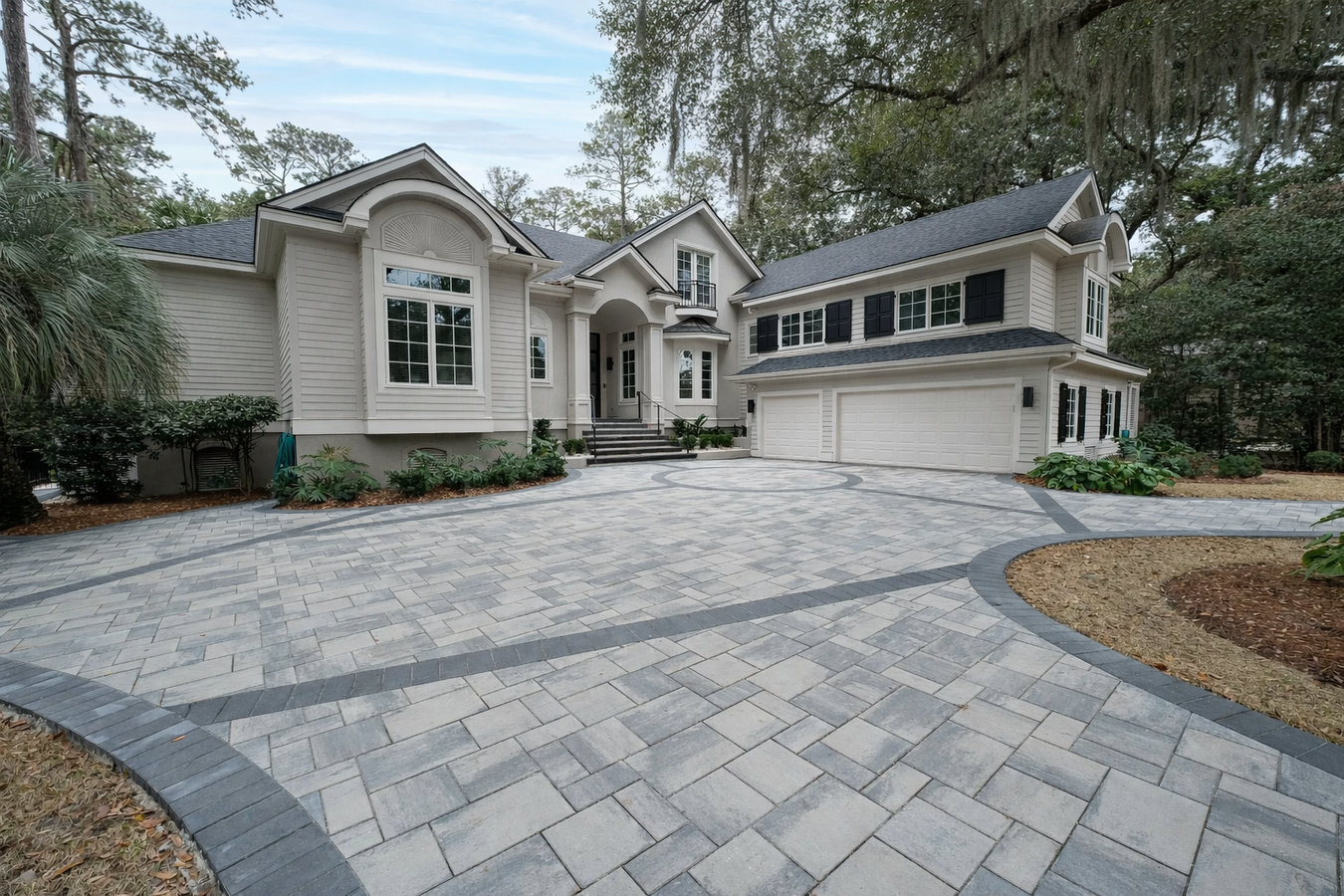
Lafayette clay soils and sloped lots break down poured driveways fast. Pavers flex with the ground, handle the wet-dry cycle, and give you a surface that can be repaired section by section - not replaced all at once.
Driveway pavers in Lafayette are individual units of concrete, natural stone, or brick set into a compacted gravel base - most standard residential driveways take two to five days from demolition to final surface, with permit processing adding a week or two before work begins.
The appeal for Lafayette homeowners is straightforward: pavers flex slightly with the ground beneath them, which matters on the clay-heavy soils common throughout Contra Costa County. When one section shifts or a tree root pushes something up, individual units can be lifted and reset without tearing out the whole surface. A poured concrete driveway in the same situation means a visible patch that never quite matches.
If your property also has a slope at the edge of the driveway, a properly designed retaining wall is often part of the same project - keeping the surrounding soil stable so the driveway surface holds its grade over time.
When a driveway breaks into many small pieces rather than one or two clean lines, the base underneath has shifted or settled unevenly. In Lafayette, this pattern is almost always caused by clay soil expanding through wet seasons and contracting through dry ones. It tends to get worse each year if left alone, so once you see it spread across a significant area, patching buys only a season or two.
Standing water on your driveway after a storm means the surface has lost its slope or the drainage underneath has failed. Lafayette winters make this more than cosmetic - pooling water accelerates surface damage and can find its way toward your garage floor or foundation slab. A properly graded paver installation channels water away from the structure.
Lafayette has mature oak, bay, and ornamental trees throughout its neighborhoods, and roots frequently grow under driveways and push sections upward over time. These create trip hazards and direct water toward the garage rather than away from it. Pavers are easier to repair around roots than poured surfaces - individual units can be lifted and reset as the root situation changes.
When concrete or asphalt starts looking rough and pitted rather than smooth, the surface layer is breaking down from the inside out. Seasonal moisture cycling in the Lamorinda area drives this process faster than in dryer climates. At this stage, repeated patching rarely holds well, and a full replacement often costs less over five years than the cycle of repairs.
Every driveway paver project starts with the ground beneath it. We excavate to the depth the soil conditions require, build and compact a proper gravel base, and install edge restraints before the first paver goes down. The base work is what determines whether the surface holds for decades or starts shifting within a few years, and we do not rush it to save time on site. Material options include concrete pavers, natural stone such as flagstone or travertine, and brick pavers - each with different price points, maintenance needs, and aesthetics suited to different home styles and HOA requirements.
Many Lafayette driveway projects also include related work. When the property has a slope at the driveway edge, we pair the installation with our retaining wall construction service to stabilize the surrounding grade. For homeowners who want a continuous look from the street to the front door, we also handle walkway construction using matching materials and the same base standards as the driveway itself.
Best for homeowners wanting durability and a clean, modern look at a price point below natural stone.
Suited to Lafayette homes where curb appeal matters most and the property's style calls for a premium, distinctive surface.
A good fit for traditional and mid-century homes where warm color tones and a classic pattern complement the existing architecture.
For properties where managing stormwater runoff is a priority or where local requirements limit impervious surface coverage.
Lafayette sits on clay-heavy soils that expand when wet and shrink when dry - that seasonal movement is the main reason poured concrete driveways crack and shift here faster than homeowners expect. A paver installation handles that movement differently because the individual units can flex and settle without fracturing. The base preparation is the key: in Lafayette, a properly built base needs to go deep enough to account for clay soil behavior, and a contractor who skimps on excavation depth or compaction is setting up a failure within a few years regardless of how the surface looks on day one. Add Lafayette's common sloped lots - particularly in the hills above downtown and along Reliez Valley Road - and you have a combination of conditions that rewards paver installations done to a proper standard.
The permit and HOA considerations here are also real. The City of Lafayette requires permits for most driveway replacement projects, and many neighborhoods including parts of Burton Valley and Happy Valley have HOA guidelines that govern material and color choices. We handle the permit application as part of the job, and we can help you navigate HOA submissions before work begins. Homeowners in nearby Pleasant Hill and Walnut Creek face the same soil conditions and often the same permitting questions - we work across the full Lamorinda and central Contra Costa area regularly.
We schedule a visit to measure your driveway, assess the slope and drainage, and discuss material options that work for your home and HOA. You receive a written estimate within one business day of the visit - no phone quotes for a job this size.
We apply for the required Lafayette building permit and help prepare any HOA submission materials. Permit review typically takes one to two weeks, so we start this step as soon as you approve the design - it does not add cost, it is part of the project.
The crew removes the existing surface and excavates to the depth required by your soil conditions. In Lafayette's clay-heavy soils, this step takes longer than on sandier ground - that is expected and a sign the job is being done correctly.
With the base compacted and edge restraints set, we lay the pavers in your chosen pattern, cut to fit at edges and curves, then sweep sand into the joints and compact the full surface. Most driveways can be driven on within 24 hours of this final step.
We handle the permit, the HOA paperwork, and the base preparation. Call or request a free estimate - we respond within one business day.
(925) 298-0709We excavate and compact to the depth Lafayette clay conditions require, not a standard depth copied from a flatter, sandier job. That extra preparation is invisible once the pavers go down - but it is what separates a surface that holds for 25 years from one that starts shifting after the second rainy season.
Every Lafayette driveway replacement we do is permitted through the City before a shovel hits the ground. The city inspection sign-off gives you documentation that protects you at resale - and it means the work was done to code, not just to our own standard. We handle all permit paperwork as part of the project.
Lafayette lots are rarely flat, and a driveway that drains toward your garage rather than away from it is a problem that compounds over time. We design the grade and drainage of every installation so water moves where it should, whether the lot slopes gently or significantly. For lots with adjacent slopes, we coordinate with our retaining wall work as needed.
Many Lafayette neighborhoods - including parts of Burton Valley, Happy Valley, and the Springhill area - require HOA approval before driveway work begins. We can help you put together the materials your association needs, including design samples and site documentation, so the review process moves without unnecessary back-and-forth. Trade associations like the Interlocking Concrete Pavement Institute set the installation standards we follow.
We work across Lafayette and the surrounding Lamorinda communities because the conditions here - clay soils, sloped lots, permit requirements, and HOA review - are what we know. A driveway installed to these standards gives you a surface that handles the local climate and protects the investment you have in your home. The Interlocking Concrete Pavement Institute publishes the installation guidelines our work follows.
When your driveway sits at the edge of a slope, a properly engineered retaining wall keeps the surrounding soil stable so the surface stays level over time.
Learn MoreConnect your new paver driveway to your front entry with a matching walkway - same materials, same base preparation, consistent look throughout your property.
Learn MorePermit season fills quickly - call now or request a free on-site estimate before your slot is gone.